


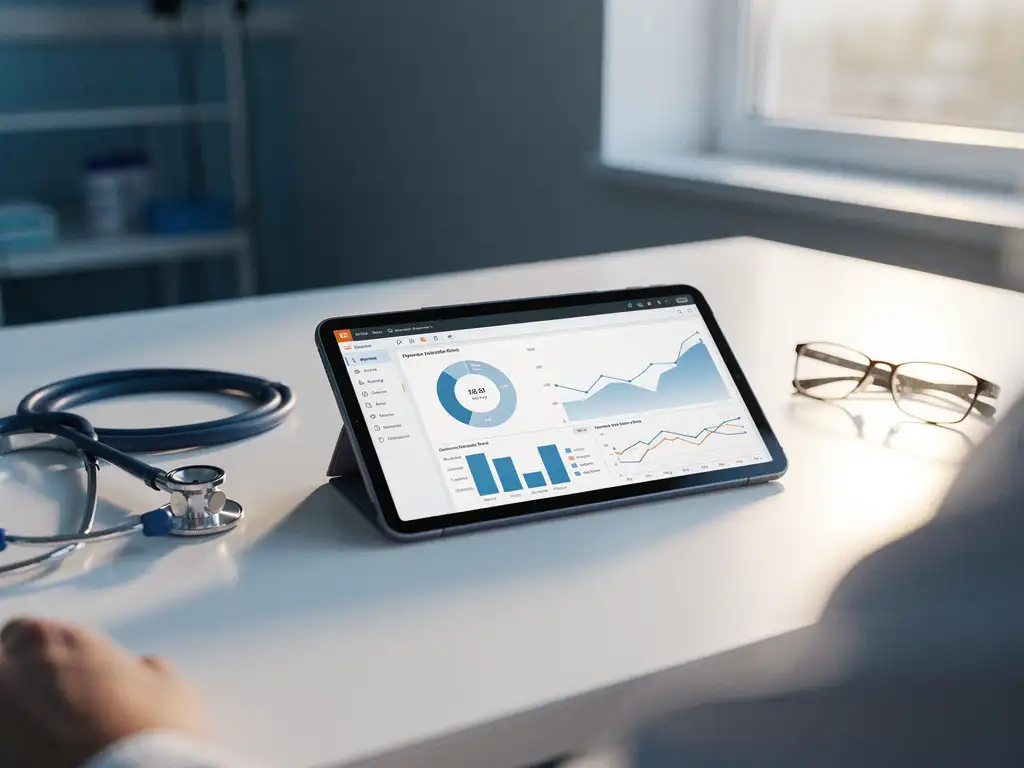
Modern fall prevention for elderly individuals utilizes advanced technology to generate insights that help healthcare organizations improve patient care and operational efficiency. These innovative systems produce various types of reports that provide crucial information for healthcare workers, management, and quality improvement. From real-time incident notifications to comprehensive trend analyses, these reports offer valuable data for better healthcare delivery.
For healthcare organizations struggling with staff shortages and increasing care demands, it is essential to understand which reports are available and how they can contribute to more efficient care processes. These insights help optimize staffing schedules and improve patient safety.
What types of reports does fall prevention technology deliver?
Fall prevention technology generates four main types of reports: incident reports for immediate alerts, trend analyses for long-term patterns, compliance reports for quality assurance, and operational dashboards for real-time monitoring. These reports provide different levels of detail and different time horizons.
Incident reports form the foundation of the system and contain immediate notifications when a fall is detected or a risk situation arises. These reports are generated instantly and include a timestamp, location, and severity of the incident. Trend analyses collect data over longer periods and show patterns in fall incidents, risk factors per patient, and seasonal variations.
Compliance reports document adherence to safety standards and quality benchmarks, which is essential for audits and certifications. Operational dashboards provide real-time overviews of system status, active alarms, and response times of healthcare workers. These different report types work together to provide a complete picture of the fall situation within a healthcare facility.
How often are fall prevention reports generated?
Fall prevention reports are generated at different frequencies, depending on the type: incident reports occur immediately upon detection, daily summaries appear every 24 hours, weekly trend analyses are automatically generated, and monthly compliance reports are compiled at the end of each month.
Real-time incident notifications have the highest priority and are sent to healthcare workers within seconds of detection. This immediate reporting is crucial for rapid intervention and preventing serious consequences. Daily reports summarize all activities from the past 24 hours and provide insight into patterns and trends.
Weekly analyses combine seven days of data to identify broader patterns, such as peak hours for fall incidents or correlations with staffing levels. Monthly reports provide strategic insights for management decisions and long-term planning. This layered approach ensures that both acute situations and structural improvements are adequately addressed.
What is included in a fall incident report?
A fall incident report contains essential information such as the exact time and date of the incident, the location within the facility, identification of the patient involved, the type of fall or risk situation, and the response time of healthcare workers. This data is automatically collected and presented in a structured format for quick analysis.
The report starts with basic data: a timestamp accurate to the second, room number or specific location, and anonymized patient identification for privacy protection. Next, the type of incident is categorized, for example, an actual fall, a near-fall, or suspicious movement requiring intervention.
Additional information includes the response time of healthcare workers from the moment of alert, any follow-up actions taken, and contextual factors such as time of day or environmental conditions. This detailed documentation supports both immediate care delivery and later analysis to prevent future incidents.
How do fall prevention reports help with staff scheduling?
Fall prevention reports support staff scheduling by providing insight into peak incident hours, workload per shift, staff response times, and correlations between staffing levels and safety incidents. This data helps managers optimize schedules and resource allocation.
Trend analyses show clear patterns in when fall incidents occur most frequently, often during shift changes, early morning hours, or on specific days of the week. This information enables managers to schedule additional staff during high-risk periods, thereby strengthening preventive care.
Workload reports document how many alerts each team member handles and what the average response times are. This helps identify overloaded staff members and fairly distribute responsibilities. Additionally, correlation analyses can demonstrate whether certain staffing levels lead to more or fewer incidents, providing evidence for optimal staffing.
How we help with fall prevention reporting
We offer advanced AI technology that generates accurate and comprehensive reports for fall prevention in healthcare organizations. Our solutions provide:
- Real-time incident detection with only one false alarm per 92 days
- Automated reporting that complies with ISO 27001 and NEN 7510 standards
- Comprehensive trend analyses for strategic planning
- Privacy-protected data processing without human image display
- Plug-and-play installation for rapid implementation
Our Kepler Night Nurse and NurseAssist software transform how healthcare organizations approach fall prevention, with intelligent reporting that directly contributes to better patient care and more efficient staff scheduling. Discover how our technology can help your healthcare organization solve staffing shortages while improving quality of care.
Frequently Asked Questions
How long does it take to implement fall prevention technology in our healthcare facility?
Implementation of modern fall prevention technology takes an average of 2-4 weeks, depending on the size of your facility. Thanks to plug-and-play installation, the system can become operational quickly, with the first week spent on installation and calibration, and the second week on staff training and fine-tuning reporting settings.
Can we customize the reports to our specific organizational needs?
Yes, most fall prevention systems offer extensive customization options for reports. You can select specific KPIs, modify reporting frequencies, create custom dashboards, and set alerts for different user groups. This ensures that each department receives information relevant to their work processes.
What happens if the system generates a false alarm?
Modern fall prevention systems have a very low false alarm frequency (only one per 92 days with advanced systems). When a false alarm occurs, it is recorded in the reporting and used to further refine the algorithm. Healthcare workers can easily mark the alarm as ‘false,’ which contributes to continuous system improvement.
How do we handle privacy and GDPR compliance with these reports?
Fall prevention systems that comply with ISO 27001 and NEN 7510 standards guarantee complete privacy compliance. Reports contain no patient imagery, use anonymized identifications, and all data is processed locally. The systems are specifically designed to generate valuable insights without violating resident privacy.
What training do our staff need to work with the reports?
Healthcare workers need minimal training – usually half a day is sufficient for basic use of dashboards and interpreting alarms. Managers and quality staff receive more extensive training (1-2 days) for using trend analyses and strategic reports. Most systems have intuitive interfaces that are quick to learn.
How do we measure ROI of fall prevention technology using reports?
ROI is measured by comparing before and after implementation data in the reports: reduction of fall incidents, decreased care costs due to fewer injuries, more efficient staff scheduling, and shorter response times. Many organizations see positive returns within 6-12 months through lower insurance premiums and improved operational efficiency.
Can we integrate reports with our existing healthcare information system?
Most modern fall prevention systems offer API connections and standard integration capabilities with popular healthcare information systems. This means fall incident data can be automatically exported to your EHR, quality management system, or HR system, preventing duplicate entry and creating a complete overview.
Related Articles
- What is the future of the labor market amid persistent staff shortages?
- How long does it take for elderly people to recover from a fall?
- How do you calculate the total cost of ownership for fall prevention for seniors?
- What does digitalization mean for the future of healthcare monitoring?
- How is innovation changing the way healthcare is delivered?
This content was generated with the help of AI and it may contain mistakes