


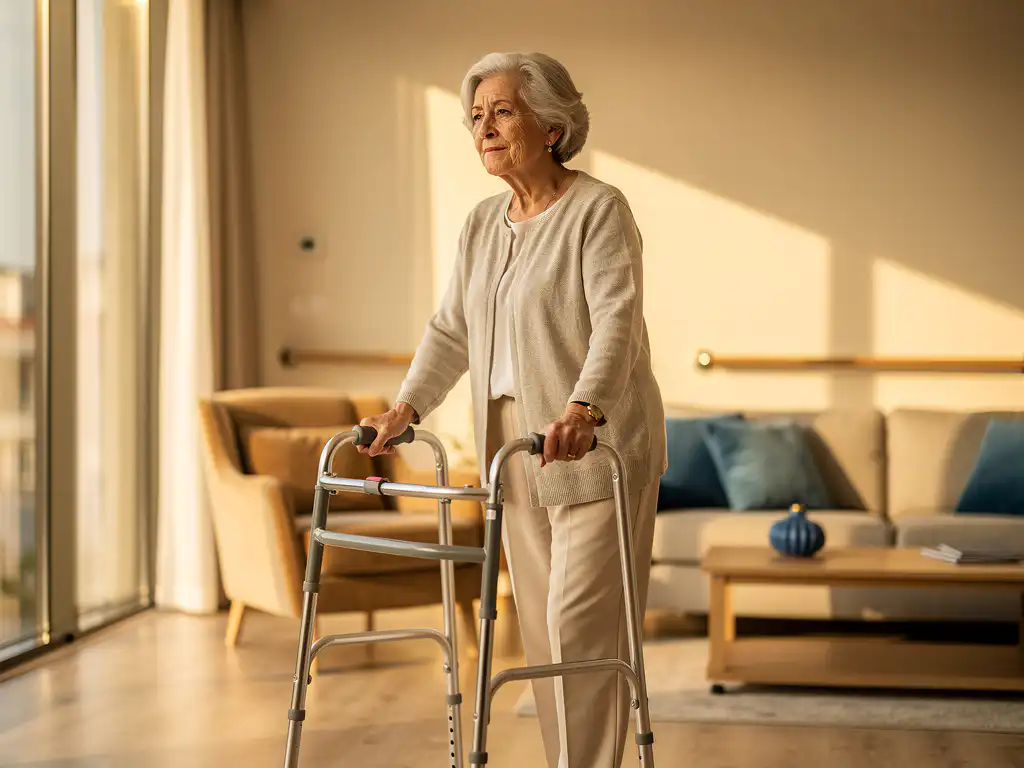
Falls are one of the greatest concerns in elderly care, with serious consequences for both residents and caregivers. Effective fall prevention for seniors therefore forms a crucial component of high-quality care delivery. From traditional approaches to advanced AI solutions: various methods exist to prevent fall incidents and ensure the safety of elderly individuals.
The development of fall prevention techniques has made an enormous leap forward in recent years, with technology playing an increasingly important role alongside proven traditional methods. This article explores the various available options and their effectiveness.
What is fall prevention for seniors and why is it so important?
Fall prevention for seniors encompasses all measures and strategies aimed at preventing fall incidents in older individuals. This includes both physical adaptations of the living environment as well as behavioral interventions and technological solutions that minimize risk factors.
The importance of fall prevention cannot be overstated. Falls are the leading cause of injury in adults aged 65 and older, often with serious consequences such as hip fractures, head injuries, and prolonged immobility. Beyond the physical impact, fall incidents also have psychological effects: seniors may develop a fear of falling again, which can lead to reduced mobility and social isolation.
For care organizations, effective fall prevention means not only better quality of care, but also cost reduction through fewer hospital admissions and treatments. Moreover, it contributes to a safer work environment for care staff and increases satisfaction among residents and their families.
What traditional fall prevention methods are used in elderly care?
Traditional fall prevention methods focus on environmental modifications, physical training, and behavioral interventions. These proven approaches still form the foundation of many fall prevention programs in care facilities.
Environmental modifications include removing tripping hazards such as loose rugs, improving lighting, installing handrails and non-slip mats, and ensuring proper-fitting footwear. Additionally, physiotherapy and balance training play a crucial role in strengthening muscles and improving coordination.
Medication review forms another important component, where doctors examine side effects that may cause dizziness or confusion. Nutritional support, particularly vitamin D supplementation, contributes to bone strength and muscle function. Finally, education programs are essential to make residents aware of fall risks and teach them how to move safely.
How do modern technological fall prevention systems work?
Modern technological fall prevention systems use sensors, cameras, and artificial intelligence to recognize risk situations before a fall occurs. These systems monitor movement patterns, body posture, and behavior to identify potential fall hazards.
Wearables, such as smartwatches and motion sensors, can detect unusual movements that indicate instability or confusion. Smart floor sensors register changes in gait patterns or sudden movements that may point to increased fall risk.
Camera-based systems use computer vision technology to analyze body postures and movements. These systems can recognize when someone is swaying, making unusual movements, or finding themselves in a potentially dangerous situation. Advanced algorithms learn from normal movement patterns and can detect deviations that humans might overlook.
What is the difference between fall detection and fall prevention systems?
Fall detection systems respond after a fall has occurred by automatically alerting help, while fall prevention systems aim to prevent falls by recognizing risk situations early and intervening.
Fall detection technologies, such as traditional alarm buttons or automatic fall detectors, are reactive in nature. They only activate after someone has fallen, meaning the injury has already occurred. While these systems are important for rapid assistance, they do not contribute to preventing the incident itself.
Fall prevention systems, on the other hand, are proactive. They continuously monitor behavior and movement patterns to identify situations that could lead to a fall. By providing early warnings to care staff, interventions can take place before an incident occurs. This can range from guiding a resident to a safe position to adjusting the environment to minimize risks.
What advantages do AI-driven fall prevention solutions offer?
AI-driven fall prevention solutions offer superior accuracy, continuous monitoring, and personalized risk assessment. These systems learn from data to become increasingly effective at recognizing potential fall risks.
The greatest advantages of AI technology lie in the ability to recognize complex patterns that are invisible to the human eye. Machine learning algorithms can detect subtle changes in movement patterns that may indicate increased fall risk, such as reduced balance or altered walking speed.
AI systems work 24/7 without fatigue or distraction, ensuring consistently high-quality monitoring. They can also monitor multiple residents simultaneously, significantly increasing the efficiency of care teams. Furthermore, these systems can learn from every new situation, making them increasingly better at predicting and preventing fall incidents.
How Kepler Vision Technologies helps with fall prevention for seniors
At Kepler Vision Technologies, we have developed a revolutionary AI solution that elevates fall prevention to a higher level. Our Kepler Night Nurse software combines advanced computer vision technology with machine learning to watch over residents 24/7 and recognize risk situations before incidents occur.
Our solution offers concrete benefits for care organizations:
- Unprecedented accuracy, with only one false alarm per 92 days
- Complete privacy guarantee, as images are never viewed by humans
- Direct alerts to care staff within seconds
- Fall detection, fall prevention, and lying position recognition in one system
- Simple plug-and-play installation without complex configuration
By deploying artificial intelligence for fall prevention, we help care organizations address staff shortages while simultaneously improving resident safety. Discover how our technology can improve your quality of care by contacting us for a no-obligation demonstration.
Frequently Asked Questions
How quickly can caregivers respond when an AI system detects a fall risk?
Modern AI fall prevention systems like Kepler Night Nurse send alerts to caregivers within seconds via their mobile devices or central monitoring systems. This gives staff sufficient time to intervene preventively before a fall actually occurs, for example by guiding the resident to a safe position.
What are the costs of implementing AI fall prevention compared to traditional methods?
While the initial investment in AI technology may be higher, organizations save significantly in the long term through fewer fall incidents, lower insurance premiums, and reduced staff costs. Studies show that each prevented fall can save thousands of euros in medical costs and legal claims.
Can residents do anything themselves to make AI fall prevention systems more effective?
Residents can contribute by maintaining their normal daily routines and communicating openly with care staff about any changes in their mobility or health. Wearing contrasting clothing can also help with recognition by camera systems, although modern AI systems usually function well regardless of clothing.
How do AI fall prevention systems handle privacy and can families access this data?
High-quality AI systems like Kepler Night Nurse process images locally without storage and without humans being able to view the images. Only aggregated data and alerts are recorded. Access to data is strictly regulated according to GDPR guidelines and usually requires consent from the resident or legal representative.
What happens if the AI system is temporarily offline or not functioning properly?
Professional AI fall prevention systems have built-in backup systems and automatically alert when technical problems occur. Care organizations should always have a fallback plan with traditional fall prevention methods and additional staff deployment during system maintenance or failures.
How long does it take for care staff to get used to working with AI fall prevention?
Most care teams adjust to AI fall prevention systems within 2-4 weeks. The technology integrates seamlessly into existing work processes and requires minimal training. More importantly, staff learn to trust the alerts and see them as a valuable tool rather than additional workload.
Related Articles
- What is the impact of fall prevention for elderly people on staff planning?
- How can technology contribute to early detection in healthcare?
- What does real-time care monitoring mean for healthcare institutions?
- How does AI contribute to more efficient nighttime care?
- How can smart technologies support care teams?
This content was generated with the help of AI and it may contain mistakes