


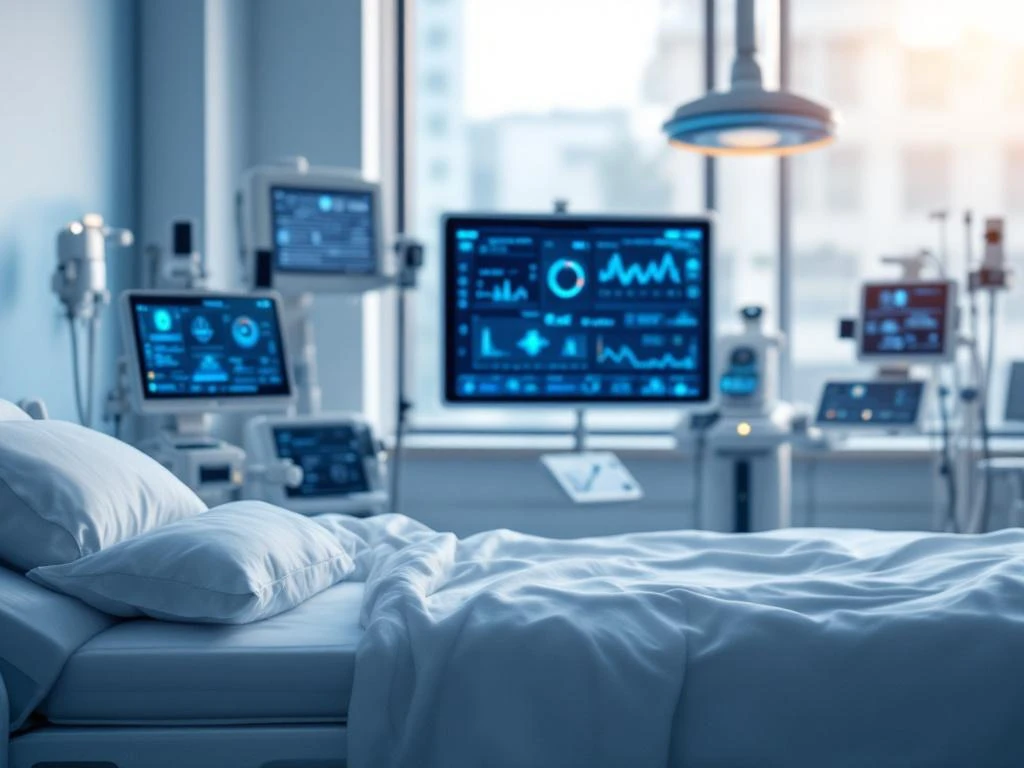
Innovation in healthcare is changing how patients are treated by implementing AI systems that help solve staff shortages and improve quality of care. Smart monitoring systems detect problems within seconds, while healthcare workers can focus on direct patient care. Privacy remains guaranteed because modern technology works without human intervention in image processing.
What are the key healthcare innovations already being used today?
AI in healthcare transforms daily care processes through smart monitoring, automatic fall detection, and predictive analysis. These technologies are no longer futuristic concepts but are actively deployed in hospitals and care facilities worldwide. They help address staff shortages by taking over routine tasks.
The most impactful innovations you encounter today are:
- Smart camera systems that monitor patients without violating their privacy
- Wearable sensors that continuously track vital functions
- AI-powered medication dispensers that prevent errors
- Automatic alerting during emergency situations
- Predictive systems that forecast health risks
These tools work together to create a safer care environment. They give healthcare staff more time for personal contact with patients while improving the quality of care. The beauty is that many of these systems are plug-and-play, making implementation straightforward.
How does artificial intelligence help with staff shortages in healthcare?
AI systems take over routine tasks and monitor patients continuously, allowing healthcare workers to focus on direct patient care. They work as an extra pair of eyes that never gets tired and only sounds an alarm when human intervention is truly needed.
The practical benefits for your care team are clearly visible. AI in healthcare means that one nurse can safely guide more patients. The system maintains surveillance while your staff performs other important tasks.
Concrete ways AI helps:
- Continuous monitoring without staff needing to be physically present
- Automatic detection of fall incidents within seconds
- Prediction of health deterioration before it becomes critical
- Medication reminders and dosage control
- Administrative tasks that are handled automatically
The result? Your staff experiences less stress, can focus on what they do best, and patients receive better care. AI fills gaps where shortages exist, without replacing the human touch.
Why is privacy so important in healthcare innovation?
Privacy in digital healthcare solutions protects patients from unwanted intrusion and ensures trust in new technologies. Modern AI systems process images without humans ever seeing them, preserving patient dignity while guaranteeing safety.
The challenge lies in finding the balance between effective monitoring and personal privacy. Patients want safety, but not at the expense of their privacy. That’s why strict standards have been developed that healthcare institutions must comply with.
Important privacy standards you need to consider:
- ISO 27001 for information security
- NEN 7510, specifically for Dutch healthcare institutions
- GDPR compliance for European patient data
- Local encryption of all data
- Automatic deletion of sensitive information
The beauty of modern AI systems is that they learn from patterns without storing individual images. They detect movements and situations but don’t save personal images. This gives patients assurance that their privacy is respected while they still receive optimal care.
What benefits do smart monitoring systems offer patients?
Smart monitoring systems offer patients faster help during emergencies and more comfort through discreet surveillance. Fall detection occurs within seconds, making long wait times and unnoticed incidents a thing of the past. This leads to better health outcomes and more peace of mind for families.
For patients, this makes a world of difference in their daily experience. They feel safer, knowing that help is always within reach. At the same time, they maintain their independence because they don’t need to be constantly physically monitored.
The benefits for patients are measurable:
- Faster response time during fall incidents and emergencies
- Less anxiety through continuous, discreet monitoring
- Privacy preservation through automatic systems
- Better sleep quality due to fewer physical checks at night
- More independence within a safe environment
Families appreciate these systems because they know their loved ones are optimally protected. It gives them peace of mind, especially during nights and weekends when less staff is present. The technology works as a silent guardian that never takes a break.
How Kepler Vision helps with healthcare innovation
We develop AI solutions that watch over patients 24/7 without violating their privacy. Our systems Kepler Night Nurse and NurseAssist detect fall incidents within seconds and generate on average only one false alarm per 92 days. Images are automatically processed without humans ever viewing them.
Our technology helps solve staff shortages by:
- Automatic fall detection that is 1,000 times more reliable than older systems
- Privacy-friendly monitoring without human intervention
- Plug-and-play installation that is operational within days
- Continuous monitoring that relieves staff from routine checks
- Compliance with ISO 27001 and NEN 7510 standards
We understand that every healthcare institution has unique challenges. That’s why we offer customized solutions that integrate seamlessly into your existing workflow. Our systems grow with your organization and adapt to your specific needs.
Want to know how our AI solutions can improve your quality of care? Contact us for a personal demonstration and discover how we can solve staff shortages together while improving patient care. More information about our innovative solutions can be found at Kepler Vision healthcare AI solutions.
Frequently Asked Questions
How quickly do AI systems detect falls?
AI systems detect fall incidents within seconds. Kepler Vision systems achieve 95% detection accuracy with only one false alarm per 92 days.
Do AI cameras violate patient privacy?
No, modern AI processes images automatically without human viewing. The technology detects situations but doesn’t store personal images.
How much time does AI save healthcare staff?
AI monitoring allows one nurse to safely oversee more patients by handling routine surveillance and alerting only during real emergencies.
Related Articles
- How effective is fall prevention for older adults?
- What quality standards apply to fall prevention for the elderly?
- How do you choose the best fall prevention solution for seniors?
- How can technology help with the shortage of healthcare personnel?
This content was generated with the help of AI and it may contain mistakes