


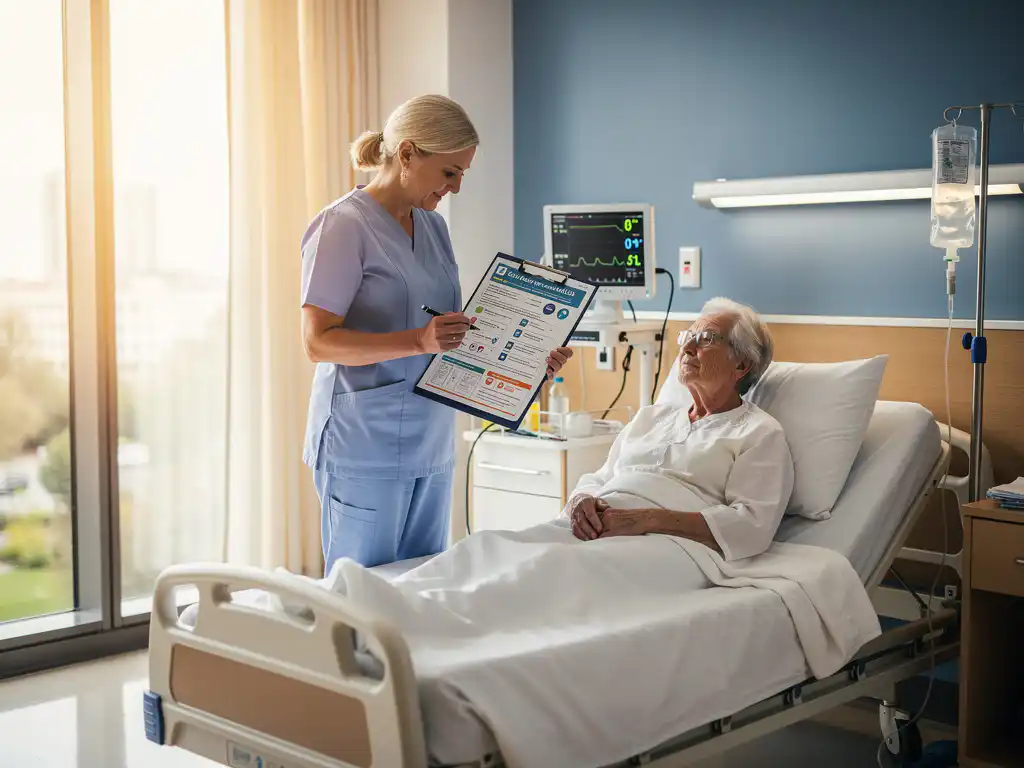
Fall prevention for seniors is becoming increasingly important as the aging population grows and healthcare organizations face mounting staff shortages. Testing the effectiveness of fall prevention solutions is crucial to ensure these systems actually contribute to the safety of residents and patients.
A thorough evaluation of fall prevention technology helps healthcare organizations make the right choices and ensures that investments in new systems actually lead to better care outcomes. This article discusses the various methods for measuring and evaluating the effectiveness of fall prevention solutions.
What is effective fall prevention for seniors and why is testing important?
Effective fall prevention for seniors is an integrated approach that identifies risk factors, detects unsafe situations, and enables timely interventions to prevent falls or minimize their consequences. It encompasses both technological solutions and human care processes working together to ensure safety.
Testing fall prevention systems is essential because falls are the leading cause of injury in older adults. A fall can lead to serious injuries, prolonged hospitalizations, and reduced quality of life. Without adequate testing, healthcare organizations cannot determine whether their chosen solutions are actually effective.
Furthermore, systematic testing helps identify weak points in the system and provides insight into how the technology performs under different conditions. This is crucial for optimizing care processes and ensuring the safety of residents and patients.
What methods exist for testing the effectiveness of fall prevention?
Various validated methods exist for testing the effectiveness of fall prevention systems, including controlled pilots, retrospective analyses, real-time monitoring, and comparative studies between different technologies or care locations.
Controlled pilots form an important testing method where the system is implemented for a specific period in a limited environment. Both quantitative and qualitative data are collected on the system’s performance. This approach makes it possible to measure impact without major risks to the entire organization.
Retrospective analyses compare the situation before and after implementation of the fall prevention system. By analyzing historical data, healthcare organizations can identify trends and determine whether the number of falls, response time, and severity of incidents have improved since the introduction of new technology.
Real-time monitoring provides continuous feedback on system performance. This includes tracking alarms, response times, and detection accuracy. This method is particularly valuable for identifying patterns and optimizing system settings.
How do you measure the accuracy of fall detection systems?
The accuracy of fall detection systems is measured using specific performance indicators: sensitivity, specificity, positive predictive value, and the number of false alarms per time period. These metrics provide a complete picture of how reliably the system functions.
Sensitivity measures the percentage of actual falls that are correctly detected by the system. High sensitivity means the system is very effective at recognizing actual fall incidents. This is crucial because missed falls can have serious consequences for the patient.
Specificity shows how well the system can distinguish normal activities from falls. A system with high specificity generates few false alarms, which is important for acceptance by care staff. Too many false alarms lead to alarm fatigue and can cause staff to respond less alertly.
The number of false alarms per time period is a practical measure that directly impacts the workload of healthcare workers. Modern systems strive for fewer than one false alarm per 90 days to keep the workload manageable and ensure the effectiveness of the care process.
What results show that a fall prevention solution works effectively?
Effective fall prevention solutions show measurable improvements in multiple core areas: a significantly lower incidence of falls, shorter response times in emergency situations, improved patient safety, and increased efficiency of care processes.
A decrease in the number of fall incidents is the most direct indicator of effectiveness. Successful implementations often show a reduction of 20-40% in the number of falls within the first six months after introduction. However, this improvement must be measured over a longer period to exclude seasonal variations and other external factors.
Improved response times are another crucial indicator. Effective systems significantly reduce the time between a fall incident and the first aid response. This is especially important because rapid intervention often makes the difference between a minor injury and serious harm.
Additionally, effective solutions show a positive impact on the workload of care staff. Through fewer false alarms and more targeted interventions, staff can spend their time more efficiently on direct patient care instead of responding to unnecessary alarms.
How Kepler Vision Technologies helps with fall prevention for seniors
We at Kepler Vision Technologies offer advanced AI solutions specifically designed to measurably improve the effectiveness of fall prevention. Our technology combines the highest accuracy with practical applicability for healthcare organizations.
Our solutions deliver proven results:
- Only one false alarm per 92 days – 1,000 times better than traditional systems
- 24/7 monitoring with direct alerting for fall incidents
- Complete privacy guarantee – images are never viewed by humans
- Easy implementation thanks to a plug-and-play concept
- Complies with ISO 27001 and NEN 7510 standards
Thanks to our proven track record with international healthcare organizations and our robust patent portfolio of 21 patents, we help healthcare organizations address staff shortages while improving the quality of care. Would you like to know more about how our fall prevention solutions can help your organization? Contact us for a personal consultation.
Frequently Asked Questions
How long does it take before you see measurable results from a fall prevention system?
The first indicators of effectiveness are usually visible within 4-6 weeks after implementation, but for reliable statistical results, a minimum of 3-6 months is needed. For a complete evaluation of long-term effectiveness, it is recommended to collect at least 12 months of data to include seasonal variations and external factors.
What are the most common implementation errors when testing fall prevention systems?
The biggest errors are insufficient staff training, failing to establish baseline measurements before implementation, and ignoring false alarms in the evaluation. The impact on the workflow of care staff is also often underestimated, which can lead to resistance and suboptimal results during the testing period.
Which specific KPIs should you minimally track during a pilot test?
Essential KPIs are: number of fall incidents per month, average response time to alarms, number of false alarms per week, sensitivity (% of detected falls), and satisfaction of care staff. Additionally, time-to-assistance and severity of injuries are important indicators for the actual impact on patient safety.
How do you handle privacy requirements during testing of camera-based fall detection?
Ensure explicit consent from residents/family, implement end-to-end encryption, and choose systems that use real-time AI analysis without image storage. Document all privacy measures according to GDPR guidelines and conduct regular audits. Transparent communication about how the technology works is crucial for acceptance.
What is a realistic budget for testing fall prevention technology in an average nursing home?
For a pilot test in a unit with 20-30 rooms, you should budget $15,000-25,000 for hardware/software, plus $5,000-10,000 for external evaluation and training. The total investment for a complete implementation test usually amounts to 2-4% of the annual care budget, but often delivers a positive ROI within 18 months.
How do you objectively compare different fall prevention systems during a test?
Use standardized test protocols with identical conditions, measurement periods, and populations. Define clear criteria in advance such as detection accuracy, user-friendliness, and integration with existing systems. Conduct A/B tests on comparable units when possible and include both quantitative measurements and qualitative user feedback in your evaluation.
What role does care staff play in successfully testing fall prevention systems?
Care staff is crucial for success – they determine response time, document incidents, and provide feedback on practical usability. Therefore, invest in thorough training, regular evaluation sessions, and a clear escalation protocol. Their involvement in the testing process and their input on workflow integration are decisive for the ultimate acceptance and effectiveness of the system.
Related Articles
- What is the relationship between workload and burnout?
- Which tools help reduce workload?
- How does technology contribute to preventive care?
- What innovations are shaping the future of elderly care?
- How is AI changing the future of healthcare?
This content was generated with the help of AI and it may contain mistakes