


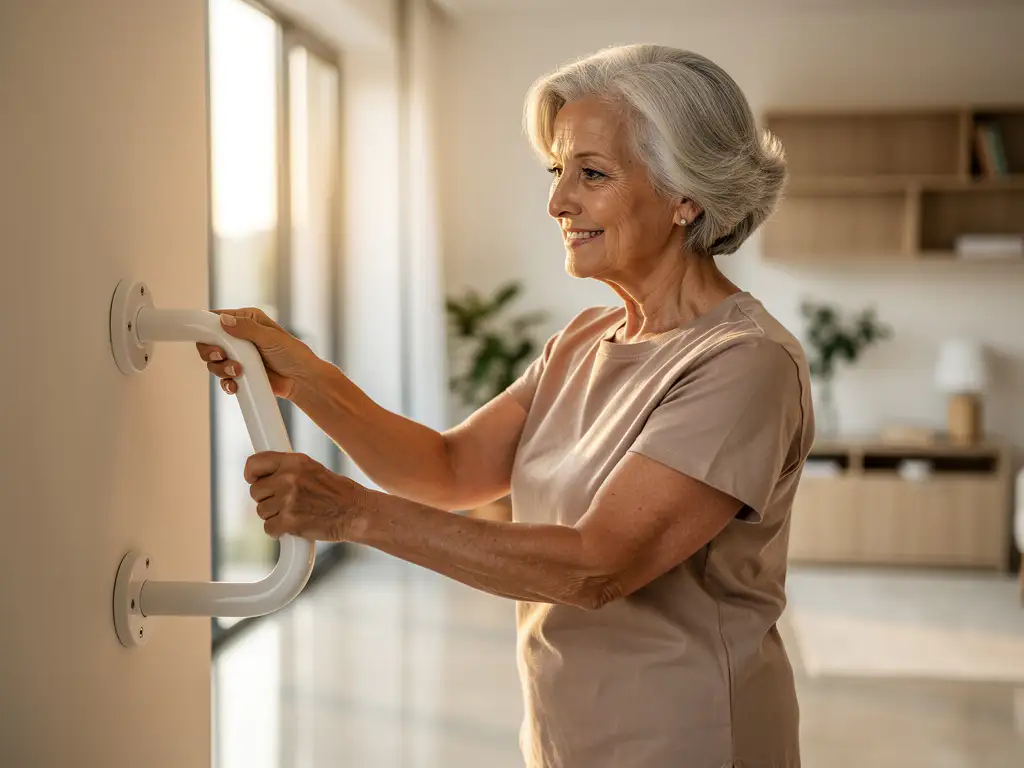
Fall prevention for elderly individuals is becoming increasingly important as the population ages and healthcare organizations face staff shortages. Modern technologies now offer advanced support to prevent fall incidents and detect them quickly. Fall prevention system providers deliver not only the technology but also comprehensive support to help care facilities achieve successful implementation.
This support ranges from technical installation to long-term service and training of healthcare staff. For elderly care organizations, it is crucial to understand which forms of support are available and how they contribute to effective fall prevention.
What is fall prevention and why do elderly care organizations need it?
Fall prevention for elderly individuals encompasses all measures and technologies aimed at preventing fall incidents or quickly detecting them when they occur. This is essential because falls are the leading cause of injury in elderly people and can lead to serious complications, such as hip fractures.
Elderly care organizations need fall prevention because staff shortages make it impossible to monitor all residents 24/7. Traditional methods, such as regular check rounds, are not always effective, especially at night when fewer staff members are present. Modern fall prevention systems can fill this gap by providing continuous monitoring without violating residents’ privacy.
The costs of fall incidents are significant, both financially and emotionally. Quick detection and prevention can not only improve residents’ well-being but also reduce the workload of healthcare staff and lower operational costs.
What technical support do fall prevention providers offer?
Fall prevention system providers offer comprehensive technical support that begins with system analysis and continues through full integration with existing care infrastructure. This support includes hardware installation, software configuration, and connectivity with existing alarm systems.
Technical support usually starts with a thorough analysis of the care facility. Providers assess the spatial layout, existing IT infrastructure, and specific organizational needs. Based on this, a customized implementation strategy is developed.
Modern fall prevention systems utilize artificial intelligence and computer vision technology. Providers ensure proper calibration of sensors and cameras so the system functions optimally under various lighting conditions and in diverse spatial configurations. They also provide support in integrating the system with existing nurse call systems and electronic patient records.
How does the implementation of fall prevention systems work in care facilities?
The implementation of fall prevention systems in care facilities follows a structured process that begins with an extensive needs analysis and ends with complete operational integration. This process usually takes several weeks to months, depending on the size of the facility.
The first phase involves a thorough inventory of the care facility. Providers analyze the spatial layout, identify risk areas, and determine optimal placement of sensors or cameras. This takes into account privacy regulations and daily routines of residents and healthcare staff.
During the installation phase, providers ensure minimal disruption to daily care delivery. Hardware is strategically placed and software is configured according to the specific needs of each department. After technical installation follows a testing period during which the system is optimized and any initial issues are resolved.
The final phase involves complete integration with existing work processes. Providers work closely with care managers to ensure the system seamlessly connects with existing care protocols and alarm procedures.
What training and education do healthcare staff receive with fall prevention systems?
Healthcare staff receive comprehensive training that covers both the technical operation of the fall prevention system and practical application in daily care delivery. This training is adapted to different functional levels within the organization.
Basic training focuses on understanding alarm signals and proper response protocols. Healthcare staff learn how to interpret different types of alarms and what actions they should take in each situation. This includes both actual fall incidents and false-positive alarms.
For supervisors and IT staff, more in-depth training is offered on system management and troubleshooting. They learn how to monitor the system, generate reports, and resolve minor technical problems without external support.
Providers often also offer refresher training to ensure staff stay up-to-date with new features and best practices. These trainings can be delivered both on-site and online, depending on the care organization’s preferences.
What service and maintenance do providers offer after installation?
After installation, fall prevention system providers offer continuous service and maintenance to guarantee optimal performance. This includes regular system updates, preventive maintenance, and 24/7 technical support for critical situations.
Service usually begins with a warranty period during which all technical problems are resolved free of charge. Providers monitor the system remotely and can often identify and resolve problems before they affect care delivery. This proactive maintenance prevents downtime and ensures reliable operation.
Regular software updates are a crucial part of the service. These updates contain not only bug fixes but also improvements in AI algorithms that further optimize fall detection accuracy. Providers usually schedule these updates during quiet periods to minimize disruption.
For hardware components, providers usually offer maintenance contracts that include preventive inspections and replacement of wear parts. There is also usually a help desk available for technical questions and support with daily system use.
How we help with fall prevention for elderly individuals
We offer a complete fall prevention solution specifically developed for elderly care facilities facing staff shortages. Our AI-driven technology monitors residents 24/7 and detects fall incidents within seconds, with accuracy that results in only one false alarm per 92 days.
Our support includes:
- Complete technical implementation and integration with existing systems
- Comprehensive training for all levels of healthcare staff
- 24/7 monitoring and technical support
- Regular system updates and optimizations
- Privacy-compliant solutions according to ISO 27001 and NEN 7510 standards
Thanks to our plug-and-play approach, care facilities can quickly benefit from advanced fall prevention without complex implementation processes. Contact us to discover how we can support your care organization in implementing effective fall prevention for elderly individuals.
Frequently Asked Questions
How long does it take before a fall prevention system is fully operational?
Implementation usually takes 2-6 weeks, depending on the size of your facility. This includes system analysis, installation, calibration, and staff training. Thanks to our plug-and-play approach, you can often benefit from basic monitoring within a few days after installation, while full optimization occurs gradually.
What happens if the system gives a false alarm?
False alarms are rare – on average only one per 92 days. When this occurs, healthcare staff can easily confirm or dismiss the alarm via the interface. The system learns from this feedback and becomes increasingly accurate. During training, staff learn how to recognize different alarm types and take the appropriate action.
Can residents turn off or avoid the system?
No, the system works completely contactless via cameras and sensors installed in the room. Residents don’t need to wear any devices and cannot turn off the system. This ensures continuous protection, even for residents with dementia who may forget to use an emergency button.
How is resident privacy protected with camera monitoring?
Our systems are fully privacy compliant according to ISO 27001 and NEN 7510 standards. The cameras only analyze movement patterns without storing personal images. All data is processed locally and contains no identifiable information. Residents and families are always informed about the system and their consent is requested.
What are the costs for maintenance and updates after initial installation?
Most providers offer maintenance contracts that include software updates, technical support, and preventive maintenance. Costs vary per provider but are usually a fixed monthly amount per room or department. This includes 24/7 support, regular AI improvements, and replacement of defective hardware.
Can fall prevention systems integrate with our existing nurse call system?
Yes, modern fall prevention systems are designed to seamlessly integrate with existing nurse call systems, electronic patient records, and alarm systems. The provider analyzes your current infrastructure and ensures complete integration so alarms reach the right care team directly via your trusted systems.
How accurate are AI-driven fall detection systems in practice?
Modern AI systems achieve 95-98% accuracy in real care environments. They can distinguish between actual falls, normal sitting/lying, and other movements. The systems continuously learn and become more accurate the longer they are in use. Factors such as lighting, room layout, and resident behavior are included in the calibration.
Related Articles
- How do you connect fall prevention for seniors with alarm systems?
- What sensors are used in fall prevention systems for elderly people?
- What are the maintenance requirements for fall prevention equipment for elderly people?
- What are five tips for fall prevention for seniors?
- How do smart systems make care more personal?
This content was generated with the help of AI and it may contain mistakes