


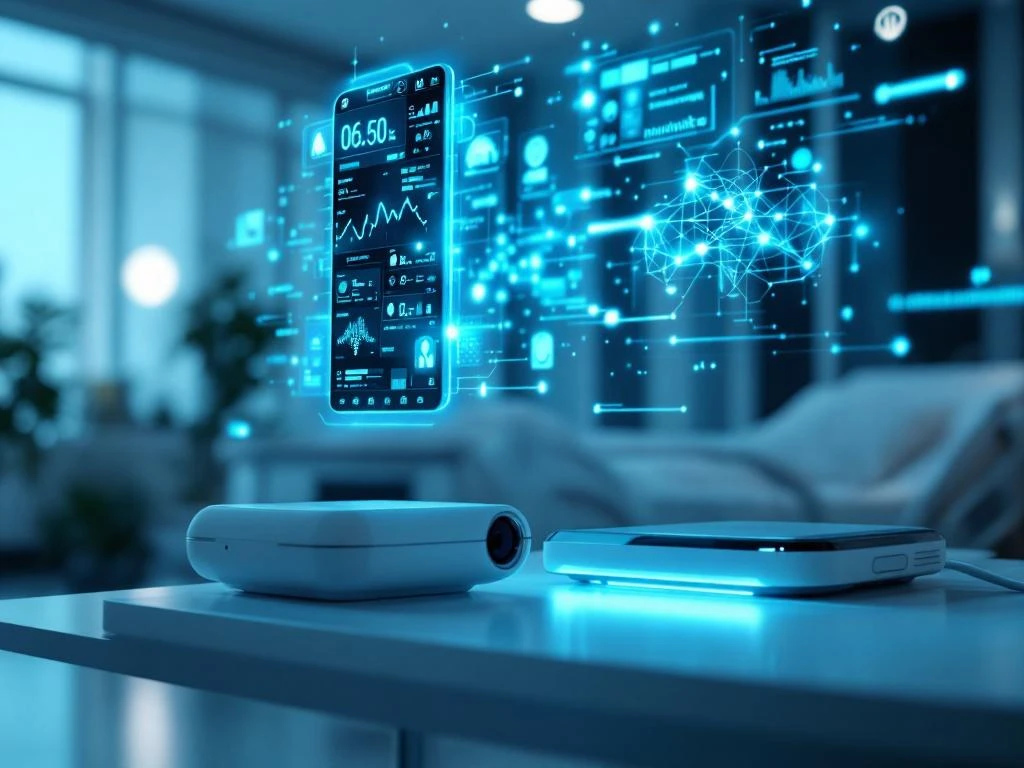
Technology supports a proactive care approach by enabling continuous monitoring and early warnings. Instead of reacting to problems after they occur, AI in healthcare helps recognize risks before something actually goes wrong. This leads to better patient outcomes, fewer emergency situations, and more efficient use of healthcare staff.
What does proactive care actually mean in practice?
Proactive care means preventing problems instead of treating them after they occur. The difference from reactive care is that you don’t wait until a patient falls or an emergency situation arises, but you recognize signals that indicate possible risks.
In practice, you see this for example in fall prevention in nursing homes. Traditionally, staff took action after someone had fallen. With proactive care, technology monitors movement patterns and recognizes when someone is walking unsteadily or displaying risky behavior. The system then alerts before a fall occurs.
Technology also enables proactive care in medication management. Smart systems remind patients of their medication intake and signal when someone forgets to take medication. This prevents health problems that arise from missed doses.
Which technologies enable proactive care?
AI monitoring systems form the foundation of modern proactive care. These systems continuously analyze patient data and recognize patterns that indicate potential problems. They alert caregivers before acute situations arise.
Sensor technology also plays an important role. Motion sensors detect unusual activity, while smart beds monitor changes in sleep patterns. These sensors work together to provide a complete picture of the patient’s status.
Predictive analytics uses historical data to assess future risks. The system learns from previous situations and becomes increasingly better at predicting possible problems. Automatic alarm systems ensure that the right person is alerted at the right time.
Wearable devices such as smartwatches and medical monitors continuously collect health data. This information helps caregivers see trends and make timely adjustments when values deviate from normal patterns.
How does AI monitoring help prevent care emergencies?
AI monitoring continuously analyzes patient behavior and recognizes subtle changes that may indicate approaching problems. The system learns normal patterns and signals deviations before they lead to emergency situations.
In fall detection, AI in healthcare works by analyzing movement patterns, for example. The system recognizes when someone becomes unsteady, stays in bed longer than normal, or displays unusual walking patterns. These signals may indicate an increased fall risk.
The technology also monitors vital functions and behavioral changes. When a patient suddenly becomes less active, has changed sleep patterns, or makes abnormal movements, the AI system analyzes whether this is normal variation or a warning signal.
The great advantage is the speed with which the system responds. Within seconds of detecting a problem, healthcare workers receive a targeted alert. This means help arrives much faster than when staff are only alerted after an incident.
Why is privacy so important in proactive care technology?
Privacy is important because proactive care technology requires continuous monitoring of very personal information. Patients must be able to trust that their data is secure and only used for their care.
Continuous monitoring means that systems collect data 24/7 about movements, sleep patterns, and behavior. This information is highly sensitive and requires the highest security standards. Patients only accept monitoring when they have confidence in privacy protection.
Modern systems solve this by processing data locally without storing images. The AI analyzes information in real-time and only saves relevant alerts. Healthcare workers receive notifications without having access to recordings or personal images.
Compliance with standards such as ISO 27001 and NEN 7510 ensures that healthcare institutions can trust the technology. These certifications guarantee that systems meet the highest requirements for data protection in healthcare.
How Kepler Vision helps with proactive care
Kepler Vision develops AI in healthcare solutions that help healthcare institutions transition from reactive to proactive care. Our systems monitor patients 24/7 and only alert when help is actually needed.
Our advantages for proactive care:
- Fall detection within seconds with a very low false alarm ratio
- Privacy-friendly monitoring without image storage
- Easy installation with a plug-and-play concept
- Compliance with ISO 27001 and NEN 7510 standards
- Internationally proven technology in use at healthcare organizations
Would you like to know how our AI solutions can help your healthcare organization with proactive care? Contact us for a non-committal demonstration and discover how technology can improve your healthcare delivery.
Frequently Asked Questions
How quickly can proactive care technology be implemented?
Most systems are operational within 2-4 weeks with plug-and-play installation and 1-2 days of staff training.
Do patients have control over the monitoring system?
Yes, patients retain full control and can disable the system temporarily or request adjustments to their monitoring preferences.
What return on investment can healthcare facilities expect?
Organizations typically see positive returns within 6-12 months through reduced emergencies and improved staff efficiency.
Related Articles
- What do you do when the workload is too high due to understaffing?
- How large is the staff shortage in the Netherlands in 2025?
- How does automation help address staff shortages?
- What are the causes of falls in elderly people?
- What are the costs of falls without fall prevention for the elderly?
This content was generated with the help of AI and it may contain mistakes